Truck Manager - 2026
- 4.4
- Rating
- 10.00M
- Installs
- Free
- Price

 Analysis by App-foxy
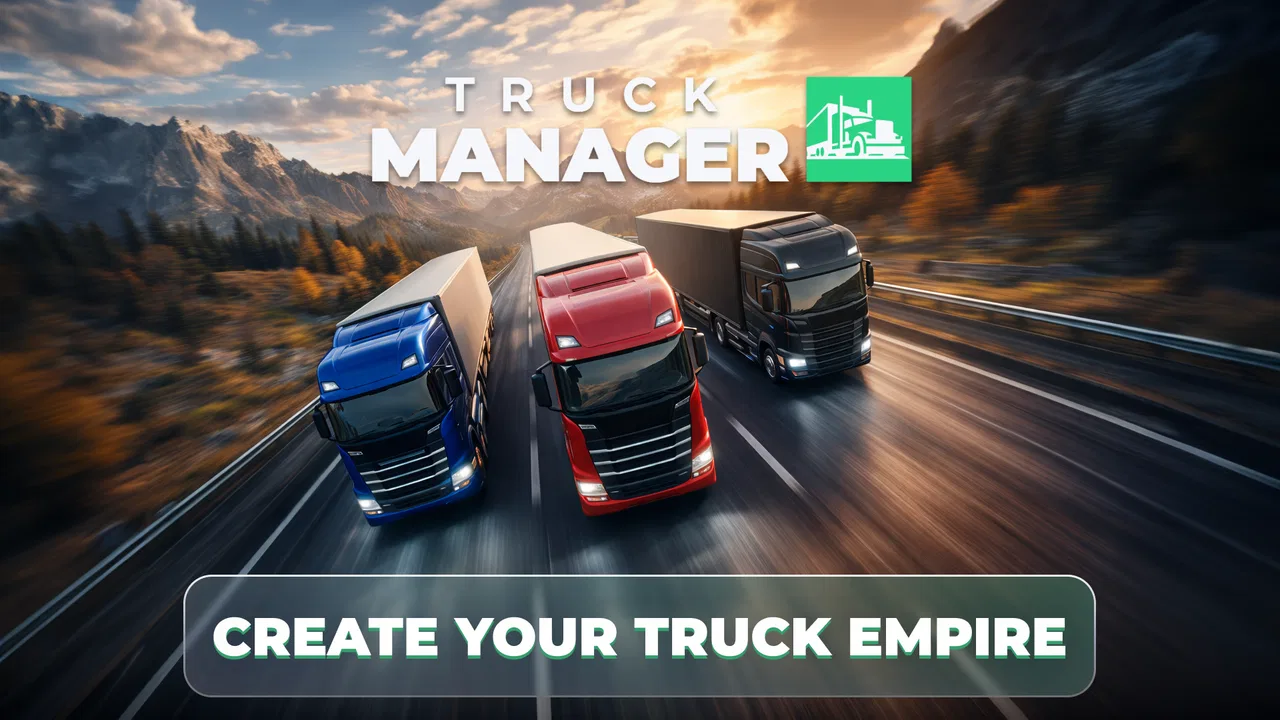
I went into Truck Manager expecting a straightforward vehicle business game, but its appeal is less about driving and more about making a growing transport operation work. You take the manager’s seat, make decisions about your fleet, watch the results unfold, and then decide what deserves your attention next. That simple rhythm gives the game a surprisingly practical feel for a simulation title.
This is a free strategy and management game from Xombat Development - Airline manager games. It is aimed at players who enjoy building an operation step by step rather than controlling every turn of a truck directly. The store describes it as a truck tycoon experience, and that is the right way to approach it: the satisfaction comes from improving a system, not from racing through a road course.
The game has reached over 10 million installs and holds a 4.7 average from around 84 thousand ratings, which suggests that its basic idea connects with a broad audience. I can understand why. It is easy to start, but the management decisions give the experience more weight than a purely casual idle title. At the same time, it is not ideal for someone looking for detailed driving physics or a story-led campaign.
You May Also Like

 Blood Strike: 2.5 Anniversary
Blood Strike’s Loadouts Turn Every Drop Into a Tactical Gamble
A close look at Blood Strike’s custom loadouts: how fast access to signature weapons reshapes its battle royale rhythm, rewards preparation, and narrows the gap between fights.

 Pandora - Music & Podcasts
Pandora’s Music Is Easy to Start, but Harder to Recover
Pandora’s strength is its low-effort path from a seed to a station. Its weak spot is how much confidence it asks you to place in connection, setup, and quiet recovery.

 8 Ball Pool
 Is Built on Rivalries, Rematches, and Routine
A close look at the rivalries, rematches, shared routines, and unanswered safety questions that turn a quick pool match into a persistent mobile community.

 Samsung Music
’s Quiet Strength Is Playing What You Already Own
Its reach comes less from spectacle than from dependable access to a personal library. That simplicity is both the app’s strongest retention engine and its ceiling.

 AccuWeather: Weather Radar
AccuWeather Review: A Quick, Clear Forecast for Everyday Decisions
For everyday plans, the best forecast is the one you can understand quickly. AccuWeather makes rain timing, radar, and local conditions easy to act on, with a few trade-offs.

 Hill Climb Racing
Why Hill Climb Racing Still Turns Crashes Into One More Run
A tiny car, a bumpy hill and one more upgrade: Hill Climb Racing keeps resurfacing because its simple chaos makes every near-miss feel personal.
More From Our News Desk



How the management loop feels in everyday play
I enjoy this kind of management loop most when I treat each visit as a small review of the business, rather than a race to spend every available reward. That makes it easier to notice whether a decision actually helped or only looked appealing in the moment. From there, the next useful question is how to make the game’s measured pace fit naturally into everyday play.
The first action is small, but it sets the direction
The opening appeal is the feeling that one decision can change the shape of the whole operation. Instead of asking me to master complicated controls, the game puts the focus on choosing how to use the resources in front of me. I look at the business, make an adjustment, and then wait for the consequences to become visible.
That first action matters because it establishes the game’s main question: should I improve what is already working, or spend on something that might create stronger growth later? In a truck-management simulation, that choice is more interesting than simply collecting money. A safe upgrade can make the next few minutes smoother, while a more ambitious move may slow progress before producing a better return.
I found it useful to resist the urge to spend immediately. The early stage encourages quick decisions, but taking a moment to understand what is generating progress makes later choices clearer. This is one of the first non-obvious lessons in the game: growth is easier when I treat each purchase as part of a chain rather than as an isolated reward.
That approach also makes the experience accessible. Someone unfamiliar with tycoon games can begin by following the visible opportunities, while experienced management players can look for the most efficient order in which to develop the operation. The controls are not the barrier. The real challenge is deciding which improvement deserves priority.
Feedback arrives through the business, not through spectacle
Once I make a decision, the game’s feedback rhythm becomes the main source of momentum. I see whether the operation is moving forward, whether a choice is paying off, and whether the next decision is becoming more affordable. The result is a steady cycle of action, observation, and adjustment.
This rhythm works best when I play in short visits. I can make a change, let the business produce progress, then return to review what happened. That makes it suitable for a quick break during the day, especially when I want something more thoughtful than a simple tap-to-collect game but do not have time for a long uninterrupted session.
A realistic use case is a commute or lunch break. I might open the game, check which part of the operation is lagging, spend available resources on a targeted improvement, and close it again. The next time I return, I have a reason to inspect the result rather than merely repeat the same tap. That sense of continuity is what keeps the loop from feeling completely empty.
The feedback is also where the game’s limitations become noticeable. Players who need constant action may find the pace restrained. The satisfaction comes from watching a plan mature, so the experience can feel slow if I expect immediate visual excitement after every decision. This is a management game first, and its feedback is designed around progress rather than adrenaline.
Rewards are more satisfying when they solve a problem
The most enjoyable rewards are not simply larger numbers. They are the moments when an improvement gives the operation more room to breathe. A better result can mean that I can afford the next decision sooner, recover from an inefficient choice, or pursue a more ambitious plan without constantly feeling stuck.
I recommend connecting every reward to a question. If I have earned enough for an upgrade, I ask what problem it will solve. Will it help me move faster, make the current setup more reliable, or open a new direction? Even when the game presents a tempting purchase, this habit prevents the progression from becoming a random spending exercise.
That is particularly important because the game includes in-app purchases ranging from $0.99 to $129.99 per item. The free entry point is helpful, and I would begin without spending anything. The core management loop is easier to judge when I first learn how the economy behaves naturally. If I later choose to buy something, it should be because I understand the value of the shortcut, not because I feel pressured by the first slow section.
For me, the strongest reward is the ability to make a more deliberate plan after learning from an earlier one. A disappointing result is not entirely wasted if it shows that I invested in the wrong area. The game turns that mistake into information, and the next attempt becomes more informed. That is a better form of progression than simply handing out constant victories.
The reset is where the strategy becomes clearer
Every management game needs a reason to begin another session, and this one finds it in the unfinished state of the business. Even after I make progress, there is still something to review, improve, or balance. The operation is never just a completed checklist; it is a system that invites another look.
I often return after deciding that one earlier choice deserves a second examination. Perhaps I spent too much on a visible improvement while neglecting a less obvious need. Perhaps the operation is progressing, but not efficiently enough. That reset between sessions gives me a chance to approach the same business with a slightly different priority.
This is not a dramatic reset in the sense of abandoning everything for a completely new story. It is more like closing the game, thinking about the current situation, and coming back with a revised plan. Players who enjoy gradual optimization will appreciate that. Players who need a clear campaign ending may find the open-ended structure less motivating.
A useful habit is to finish a session after making one meaningful decision rather than emptying every available resource at once. That leaves a clear point of comparison for the next visit. It also reduces the chance of spending impulsively, especially when several upgrades appear attractive at the same time.
What separates it from driving games and idle alternatives
The easiest comparison is with truck-driving games, but the two experiences serve different moods. A driving game gives me direct control over the vehicle, the road, and often the handling. Truck Manager shifts that attention to planning the operation behind those journeys. If I want to steer, navigate, and feel the vehicle respond, I would choose a driving-focused alternative instead.
Compared with a simple idle game, this title offers more room for judgment. I am not only claiming a reward and waiting for the next one. I have to think about how progress is being created and whether a purchase improves the overall direction. The trade-off is that it asks for more attention than a purely passive game, while still retaining the slower rhythm that makes idle-style play convenient.
It also differs from heavyweight business simulators. Those games can bury the player in spreadsheets, detailed logistics, and long-term forecasting. This one is more approachable. I can understand the immediate purpose of a decision without needing to manage an entire corporate model. That makes it a good middle ground for someone who wants strategy without turning a mobile session into administrative work.
Small decisions that improve the experience
My first practical tip is to identify the bottleneck before buying anything. If progress is being held back by one weak part of the operation, improving unrelated areas may look productive but produce little real benefit. I get more from a purchase when it addresses the reason progress feels slow.
Second, I would avoid treating every reward as permission to spend immediately. Keeping a little flexibility is valuable because the next decision may be more useful than the first available upgrade. This creates a trade-off between visible short-term progress and the ability to respond to a better opportunity.
Third, I would use short sessions deliberately. The game’s loop is easier to understand when I compare the state before and after a decision. Opening it repeatedly without a plan can make the experience feel repetitive, while returning with a specific question gives each visit a purpose.
Fourth, I would separate experimentation from optimization. Early choices can teach me how the operation reacts, but once I understand the pattern, repeating the same inefficient move only delays progress. The game is more rewarding when I allow myself to test an idea, evaluate the result, and then change course.
Finally, I would keep the purchase system in perspective. Because the game is free, it is easy to try without commitment. However, the presence of optional purchases means players who dislike monetized progression should decide in advance whether they are comfortable playing patiently. That boundary is more useful than judging the game solely by its fastest route forward.
Who will enjoy it, and who should skip it
I think Truck Manager is a strong fit for players who like tycoon games, incremental improvement, and decisions that pay off over several sessions. It suits people who enjoy checking a developing operation, spotting inefficiencies, and choosing the next investment. It is also friendly to casual play because a session does not need to become a long event.
It is less suitable for anyone looking for a realistic trucking cockpit, detailed road exploration, or a narrative campaign with a strong cast of characters. The manager’s viewpoint is the point of the game, so players who want to feel physically connected to the truck may find the experience too indirect.
I would also be cautious about recommending it to someone who dislikes waiting for progress or making repeated economic decisions. The loop depends on patience. Its pleasure comes from seeing a plan work, not from delivering a constant stream of dramatic surprises.
The Everyone content rating makes it approachable for a broad audience, although younger players may still need guidance around optional purchases. The game was released on October 24, 2024, and its current version is 1.4.2, with Android support from version 10 onward. Those details matter when deciding whether it will run comfortably on a particular device.
My verdict on the action-feedback-reward-reset loop
After spending time with it, I see Truck Manager as a focused mobile simulation built around a clear cycle: make a management choice, watch the operation respond, use the reward to remove a bottleneck, then return with a better plan. That cycle is not flashy, but it is coherent, and coherence matters more than spectacle in this type of game.
Its best quality is that progress feels connected to decisions. Even a modest improvement can be satisfying when I understand why it helped. Its main weakness is the same feature viewed from another angle: the slower, repeated rhythm may not hold the attention of players who need constant interaction.
I would recommend trying it free before considering any purchase. Give it enough time to reveal whether its measured pace suits you, and pay attention to whether you enjoy planning the next move more than collecting the current reward. If the answer is yes, this truck-management game can become a pleasant routine rather than a disposable time filler.
For my taste, it works best as a compact strategy habit: open it, diagnose the business, make one thoughtful change, and leave with a reason to come back. That is a modest promise, but the game delivers it well enough to earn a place among approachable simulation games for Android users who prefer building an empire from the manager’s desk.
FAQs for Truck Manager - 2026
01What is the main objective of Truck Manager - 2026?
Truck Manager - 2026 is a simulation game where players manage a trucking company. The main objective is to build a successful business by acquiring trucks, hiring drivers, and completing delivery contracts. Players must strategize on routes, manage resources, and optimize operations to maximize profits and expand their empire.
02Is Truck Manager - 2026 available on both Android and iOS?
Yes, Truck Manager - 2026 is available for download on both Android and iOS platforms. Users can find the game on the Google Play Store for Android devices and the Apple App Store for iOS devices. Ensure your device meets the system requirements for optimal performance.
03Does Truck Manager - 2026 require an internet connection to play?
Truck Manager - 2026 primarily functions as an offline game, allowing players to enjoy the simulation without needing an internet connection. However, certain features, such as leaderboards and in-app purchases, may require an internet connection to access additional content and updates.
04Are there any in-app purchases in Truck Manager - 2026?
Yes, Truck Manager - 2026 offers in-app purchases that enhance the gaming experience. Players can buy premium currency to unlock special trucks, speed up progress, or access exclusive features. While the purchases can enhance gameplay, they are optional and not required to enjoy the core game.
05What are the key features that set Truck Manager - 2026 apart from other simulation games?
Truck Manager - 2026 stands out with its realistic graphics, detailed truck customization options, and comprehensive management system. The game offers a dynamic weather system, a variety of trucks to choose from, and intricate logistics planning. Its attention to detail in strategy and resource management offers an engaging and immersive experience.
Pros
- Intuitive interface for easy navigation.
- Realistic graphics enhance gameplay experience.
- Comprehensive tutorial for beginners.
- Wide range of trucks and customizations.
- Engaging missions keep players hooked.
Cons
- Occasional in-app ads can be disruptive.
- Requires a stable internet connection.
- High battery consumption on older devices.
- Limited offline play options available.
- In-app purchases can be costly.

Truck Manager - 2026
Gallery